


When most people suffer from back pain between the shoulder blades, they associate its occurrence with various diseases of the spine, nerve roots, ligaments, intervertebral discs or the intervertebral discs themselves. However, it should be noted that such painful sensations can also be associated with other diseases of the chest organs - stomach, heart, respiratory system, mediastinal organs.
Such pain can be either acute, which increases rapidly and either passes quickly or increases significantly over time, or chronic, which bothers the patient for a long time and requires accurate diagnosis, since it can be a symptom of a serious pathology of all organs of the chest.Sometimes pain between the shoulder blades can occur only after sudden physical exertion or after staying in a certain uncomfortable position for a long time.
It should be remembered that pain in the interscapular region is not a disease, but a symptom, and before using ointments for back pain or injections, the true cause of its occurrence should be determined.When contacting a doctor, it is very important to describe all the smallest symptoms accompanying the pain, the time of its occurrence and the provoking factors of its intensification, since the doctor must help determine the direction of the examination, and it is sometimes very difficult to make the correct diagnosis without accurate data about the nature of the pain.
Very often, premature identification of the true cause of pain between the shoulder blades forces a person to undergo many expensive and lengthy examinations and use various treatment options, which are sometimes incorrectly prescribed and therefore do not bring the desired result.Therefore, it is very important that the patient himself knows about the possible list of diseases characterized by this pain syndrome.
Pain caused by pathologies of the spine
We will not dwell on such obvious causes as bruises, injuries, dislocations and fractures of the vertebrae, but will consider other possible causes of such back pain.
Intervertebral hernia
You should know that a vertebral fracture in the thoracic spine is very rare, as this part of the spine is not exposed to as much stress as the cervical and lumbar spine areas.To diagnose or exclude this pathology, a neurologist or osteopath refers the patient for an MRI or CT scan.Changes in intervertebral hernias are due to the fact that the fibrous ring - the outer part of the intervertebral disc - begins to protrude from the tear, while the distance between the vertebrae decreases and the nerve roots become pinched.This means that the fibrous ring tears and the nucleus pulposus (the shock absorber in the middle of the disc) begins to protrude into it.
If such a hernia is detected, doctors prescribe NSAIDs (anti-inflammatory drugs), physiotherapy, exercise therapy, reflexology, and in severe cases, surgery is indicated.The difference between such pain in intervertebral hernia of the thoracic spine and other pathologies is that it is localized only in one place, and the pain can also radiate to the chest, which can resemble symptoms of pulmonary or cardiac dysfunction.If the intervertebral hernia remains untreated for a long time, it can lead to a curvature of the spine, paraparesis of the lower extremities, dysfunction of the pelvic organs and chronic pain syndrome.
Overexertion combined with hypothermia of the back muscles
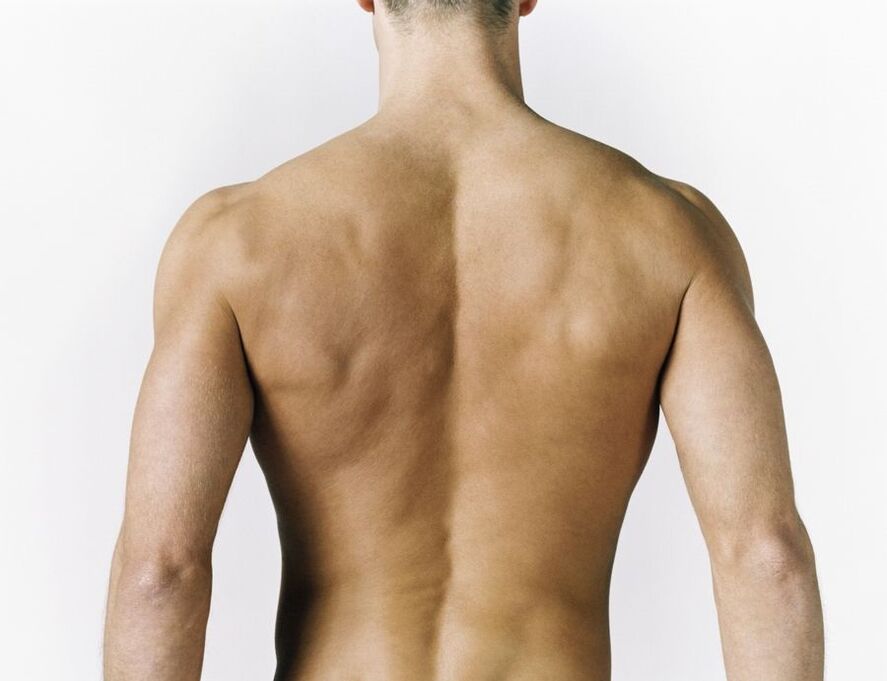
Overloading the back muscles can also lead to pain in the shoulder blade area;This is not considered a disease, but with frequent excessive loads, heavy lifting, prolonged sitting or monotonous posture, the risk of developing osteochondrosis, scoliosis and intervertebral hernias increases.Very often, such pain affects people whose work requires staying in the same position for several hours a day - these are seamstresses, drivers, office workers, surgeons.
Sometimes with the combination of such an occupation and air conditioning, hypothermia, a so-called lumbago, can occur, when the pain becomes more severe and requires the prescription of NSAIDs (non-steroidal anti-inflammatory drugs), the use of warming, distracting ointments, massage, etc.
To prevent such complications, you should try to avoid drafts, lead a maximally active lifestyle, practice yoga, bodyflex and therapeutic exercises, and undergo professional massage every six months.
Spinal tuberculosis
Today, many doctors seem to “forget” this disease and anti-tuberculosis services in the country are declining for some reason, but almost 90% of the population has been infected with Mycobacterium tuberculosis since childhood.If a person has suffered an injury, especially to the back or joint, or is simply very cold and the immune system is severely weakened, a tuberculous focus often appears at the site of the injury, which cannot always be identified in time by certain signs, even on an X-ray.
In such cases, the diagnosis is often made only when the person is already exhausted by terrible pain and has a number of complications.This disease can cause very severe, burning pain between the shoulder blades;Patients describe it as twisting or boring at one point in the spine, and although the focus is localized in the thoracic spine, the pain radiates to the chest where a burning sensation, heat and pain are felt.
Tuberculosis of the spine is a very insidious disease, and when it occurs in parts of the spine, the patient does not always have lesions in the lungs;It can be an independent focus of tuberculosis infection in any part of the spine.People are used to the fact that tuberculosis is a disease that affects only low social classes of the population and, as a rule, is localized only in the lungs.This is a big misunderstanding!
When the body's defenses are weakened, the Koch bacillus, present in almost every body, is activated in the most weakened organs and a slow inflammatory process begins;These can be kidneys, lymph nodes, female fallopian tubes, prostate or testicles in men or individual vertebrae of the spine or joints of the limbs.
Scoliosis
According to statistics, almost 50% of the population suffers from scoliosis of varying degrees - curvature, twisting of the spine, and most often it is the thoracic spine in combination with the cervical or lumbar spine.And since the ribs are connected to the chest regions, the shape of the chest also changes.There are a number of reasons for its development - these are congenital diseases of the ligaments, bones, as well as acquired ones - severe physical overload, sedentary office work or, in schoolchildren, sitting at a desk.
A surgeon, neurologist, orthopedist or osteopath can make a similar diagnosis using a lateral and direct chest x-ray.Therapy for such a pathology must be very intensive and long-term - this includes massage, wearing a special corset and therapeutic exercises.The main symptom of scoliosis is back pain between the shoulder blades, and the following symptoms also occur:
- At an early stage, the curvature may be visually subtle, but as scoliosis progresses, the curvature becomes clearly visible when examining the patient from behind.
- Scoliosis causes increased fatigue in the back muscles
- Shoulders and arm position can be different heights
- The pain that bothers the patient in the chest is often localized on one side
- The pain between the shoulder blades can occur sporadically due to severe overexertion or prolonged standing or sitting, but it can also occur permanently.
Osteochondrosis
Since the primary stages of osteochondrosis can now be found even in ten-year-old children, this pathology can rightly be called the scourge of a modern city dweller.More recently, this disease was considered a disease of the elderly, but modern life, an unhealthy, sedentary lifestyle leads to the early development of dystrophic changes in the joints and spine.The cause of back pain is the inflammatory process that develops in the surrounding tissue around damaged vertebrae, as well as pinched nerve roots.The following symptoms are characteristic of osteochondrosis:
- Constant, aching back pain that is aggravated by sneezing, coughing, sudden changes in posture, and physical activity
- When you straighten your shoulders, a crunching sound can be heard between the shoulder blades
- Chest pain can be described as feeling like there is a stake
- Reduced mobility of the ribs leads to difficulty breathing and the person begins to breathe with his stomach.
- The ability to move the hands is limited, weakness, tingling or numbness can be felt in the hands.
Intercostal neuralgia
Intercostal neuralgia usually causes pain on one side of the chest, but in rare cases it can also occur in the shoulder blade area.This happens in situations where there is compression of the nerve roots in the thoracic region due to excessive stress, hypothermia, injuries, infectious diseases or osteochondrosis of the thoracic region.
In the case of intercostal neuralgia, the symptoms and pain increase due to pressure on the chest, when coughing and can bother the patient day and night.Since pain due to osteochondrosis, scoliosis and intercostal neuralgia is very difficult to distinguish, you should contact qualified orthopedists, neurologists, osteopaths and surgeons to clarify the diagnosis.
Spondyloarthrosis
This disease is very similar to osteochondrosis in terms of the nature of the pain, the factors that increase it during exertion, and changes in posture.It is also chronic in nature with periods of exacerbations and remissions.The distinction between spondyloarthrosis and osteochondrosis is only possible with the help of X-rays, MRI or CT.In this disease, cartilage is destroyed and replaced by bone tissue, so that bony protrusions can be found on the vertebrae.
Myositis of the back muscles
After hypothermia, acute respiratory viral infection, flu, muscle strain or back injury, inflammation in muscle tissue can occur - myositis.Like any illness, it can be acute or chronic.The pain can occur in any part of the spine;It is painful in nature and also increases with palpation, movement and physical activity.This is not a dangerous condition and using warming and pain-relieving ointments for back pain usually helps.
Diseases of the internal organs
As already mentioned, pain in the shoulder blade area on the back is not always a sign of spinal diseases;Almost all diseases of the mediastinal organs, heart, stomach, pancreas and gallbladder can contribute to the occurrence of back pain.In our time of oncological tension, when cancer does not spare either children or adults, the development of tumors in the mediastinal organs, stomach and lungs can also manifest itself in pain in the shoulder blade area.
Diseases of the cardiovascular system
Coronary heart disease, heart attack, angina pectoris are diseases that can also cause such pain.With angina pectoris.For example, the pain never lasts longer than 5 minutes and usually disappears immediately when taking nitroglycerin.However, in the event of an acute attack, when severe pain lasts more than 5 minutes, blood pressure drops, cold sweats appear, or the skin is pale, you should immediately call an ambulance.
Diseases of the gastrointestinal tract
Peptic ulcer, pancreatitis, cholecystitis are three diseases that can also be responsible for the appearance of pain in the chest area, both front and back.The development of stomach and pancreatic cancer can also cause such sensations.
Respiratory diseases
If, in addition to back pain, the patient also suffers from a cough or a slight increase in body temperature, lung disease may be the cause.Typically, diseases such as pneumonia or pleurisy are preceded by hypothermia, acute respiratory viral infections and influenza.Recently, atypical forms of pneumonia have become more common, when pneumonia is caused by pathogens such as mycoplasma or chlamydia, they are not accompanied by a very high temperature, but can occur against the background of a slight fever, and when inhaling, back pain can occur on the right and left, which increases especially with deep inhalation.The main criterion for distinguishing pulmonary pathology from other causes is the presence of fever, even if not high, and cough.
Other diseases
- Osteoporosis with fractures of the vertebral bodies, for example due to long-term use of steroid hormones or a drop in estrogen in postmenopausal women.
- Metastases in the vertebrae of stomach cancer, for example, can also cause pain
- Spontaneous fractures due to irrational stress.
- Ankylochial spondylitis (Bechterew's disease) is a systemic disease.It more often affects men in whom, against the background of inflammation, the vertebrae are affected and ossification of the ligaments occurs.This causes the spine to become inflexible and is described on x-rays as being like a bamboo stick.